 |
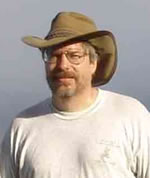
Dr. David Anderson is a professor of Anthropology at the University of Tennessee. He has nearly forty years of direct experience in southeastern archaeology, and has written extensively on Paleoindian archaeology in the Southeast, including as co-editor of the only regional synthesis on the subject to date, The Paleoindian and Early Archaic Southeast (Anderson and Sassaman 1996). He was a major participant in the National Historic Landmark program’s Paleoindian Theme Study for the Eastern United States, and the author of the section covering the Southeastern United States, including the section on how to evaluate Paleoindian sites for NRHP eligibility. |
|
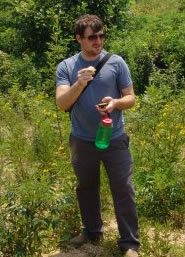 |
Shane Miller is a doctoral student at the University of Arizona, specializing in Paleoindian archaeology, lithic technology and spatial analysis. He received his Masters degree in Anthropology in 2007 from the University of Tennessee, with his thesis research documenting Clovis deposits at the Topper Paleoindian site in Allendale, South Carolina, where he was the senior field director for two years. With Anderson, he is a co-director of the online Paleoindian Database of the Americas project. His dissertation research focuses on the relationship between climate change and early hunter-gatherer landscape use in the Cumberland and Tennessee River Valleys. |
|
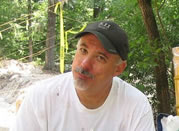 |
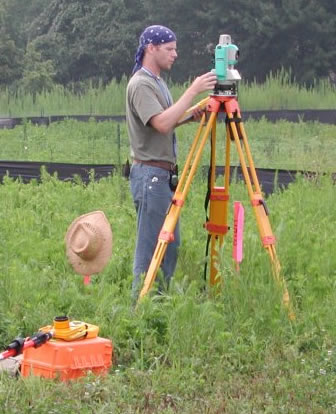
Tom Pertierra is the Director of Operations for the University of South Carolina’s Southeastern Paleoamerican Survey (SEPAS) program. He is also the founder of SEPAS, Inc. a Direct Support Organization that logistically supports archaeological projects that involve the public in their programs. An avocational archaeologist, Tom has assisted Dr. Albert Goodyear in directing the Topper project in Allendale South Carolina for the past six years. An accomplished flintknapper and excavator, he is an expert on managing project logistics, security, and collections analysis. He specializes in public outreach, which will be a major part of this project. In addition, SEPAS, Inc. provides a broad array of field equipment that will be made available to the Bells Bend project including total stations, hand excavation equipment, a mobile equipment trailer and computerized analysis laboratory. |
|
 |
|
|
 |
|
|
 |
Stephen Carmody is a doctoral student at the University of Tennessee specializing in paleoethnobotany. His master's research involved examining Middle Archaic paleobotanical remains from Dust Cave in Northern Alabama. For his dissertation, he is continuing to examine Archaic period paleobotanical remains as a means to reconstruct prehistoric subsistence patterns in the Mid-South. |
|
 |
|
|
 |
Andrew Weidman is a M.A. student at the University of Tennessee. His thesis research focuses on Paleoindian lithic technology at a quarry-related site near Allendale, SC. After receiving his B.A. from the University of Tennessee, he spent several years working on CRM projects throughout the eastern United States. |
|
 |
Martin Walker was born and raised in New York. He earned his BS in Mechanical Engineering from Manhattan College and his BA in Anthropology from Lehman College, CUNY. After working as an intern both in the lab and in the field with the American Museum of Natural History, Martin moved to Knoxville to pursue his graduate studies in Archaeology at the University of Tennessee. Martin’s MA thesis is a study of the shell rings of the North American southeast Archaic, but his interests broadly include both the use of remote sensing and GIS within archaeology, and the role of politics and history in cultural decision making. |
|
 |
Sarah E. Walters is a M. A. student in Anthropology at The University of Tennessee, Knoxville. She received her B. A. in Anthropology from Louisiana State University. Her research interests focus on prehistoric archaeology with an emphasis on lithic technology, as well as an interest in experimental and theoretical archaeology. Since 2007 she has been involved in several archaeological projects with various private firms, non-profit organizations, and academic institutions. |
|
 |
Jessica Phillips Bogstad received her Master of Science degree in Criminal Justice this past May from Charleston Southern University. She currently serves as a Deputy Coroner in Barnwell, South Carolina. Jessica has participated in excavations at the Topper site (Allendale, SC) for the past three seasons. She is an applicant of the National Forensic Academy, located at the University of Tennessee Law Enforcement Innovation Center. Her interests include forensic anthropology and paleodermatoglyphics, and will be the assistant logistics manager on our project. |
|
 |
|
|
 |
|
|